Learn Tools and Methods for Neuroscience Research
Programming, data analysis, and research workflow courses for self-paced learning freely available to the neuroscience community.
Browse CoursesSee Our Platform in Action
Who Are We?
Why Us?
- Sessions designed for ~1 hour completion
- Accessible to all backgrounds
- Interdisciplinary approach
- Tested in live settings
Our Materials
- Browse directly in browser
- Interactive JupyterLite exercises
- Download notebooks to work on them locally
- Installable environments provided
Get in Touch
Our Courses
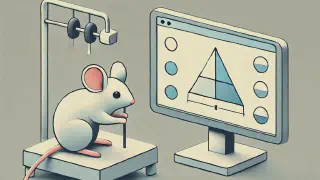
Building Robust Neuroscience Experiments with Python and PsychoPy
Learn to build modular experiments with Python and PsychoPy using software engineering best practices like automated testing, data validation, and continuous integration.

Crash Course on Python
Compact one-day course covering data analysis with Numpy and Pandas, visualization with Matplotlib, and statistical tests using real neuroscience data.
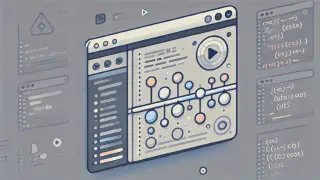
Essential Computing Tools for Scientists
Tools for reproducible computational research: VSCode and Jupyter for interactive coding, Conda and Pixi for environment management, and Git and GitHub for version control and collaboration.
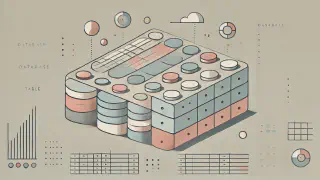
File and Data Management
Explore database management with SQL, DuckDB, HDF5, and JSON to seamlessly integrate and analyze complex neuroscience datasets.
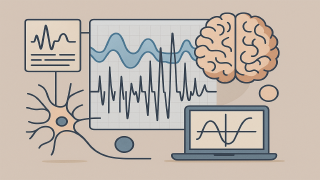
Intro to Neural Spike Analysis in Python
Analyze neural spiking data with Pandas, Seaborn, and Elephant, from spike sorting with SpikeInterface to advanced statistical inference methods.

Intro to Python for Scientists
Detailed introduction to programming with Python including data analysis with Numpy and Pandas, visualization with Matplotlib, and statistical tests using real neuroscience data.
Introduction to Calcium Imaging Analysis
Analyze calcium imaging data from TIFF stacks to neuronal activity using trace extraction, spike inference, and tools like CaImAn and Suite2P.
LFP Analysis in Python
Introduction to local field potential (LFPs) analysis and signal processing using Numpy, Xarray, Scipy, and specialized tools like Elephant and Neo.

Notebook Driven Development
Learn to create reproducible research with data science notebooks, hvPlot visualizations, and automated multi-notebook pipelines using PyDoIt and Papermill.
Introduction to Arduino
Learn C++ programming with Arduino microcontrollers for neuroscience experiments, from sensors to efficient real-world code and version control.
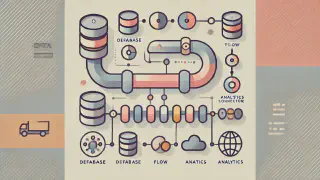
Neuroscience Data Analysis Pipelines with Python, Git, and Snakemake
Build robust, reproducible analysis pipelines with Snakemake, Conda, and Git for scalable computational neuroscience projects.
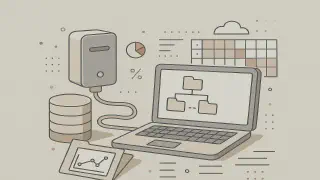
Research Data Management with DataLad
Learn to create datasets with version control, track computational provenance and use open science repositories to create more open and reproducible science